
The housing conversation in the Philippines is moving beyond the question of how many homes need to be built. It is increasingly about how homes can be delivered more efficiently, how communities can keep pace with changing needs, and how government and the private sector can work together to make housing more accessible.
These concerns were at the center of the Subdivision and Housing Developers Association (SHDA) 34th National Developers Convention, held September 16 to 17 at Marquis Events Place in Bonifacio Global City, Taguig. More than 400 stakeholders, including national policymakers, regulators, financial institutions, and industry leaders, took part in the two-day gathering.
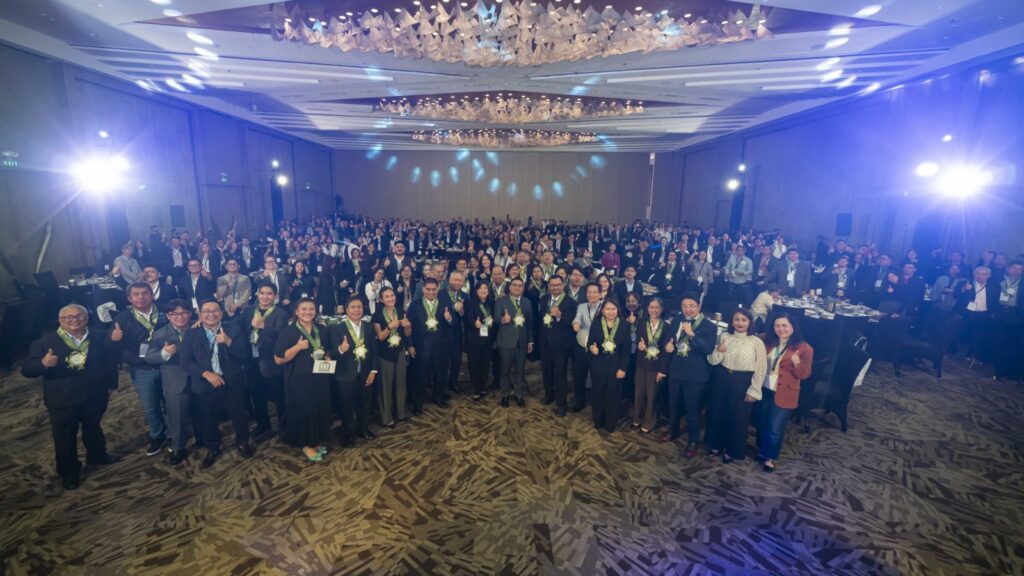
34th SHDA National Developers Convention (2026)
Under the theme “Elevate: Sustaining Progress through Collaboration and Strategic Housing Innovations,” the convention ended with the adoption of a seven-point resolution roadmap. The resolutions are intended to give the housing industry and its government partners a clearer set of priorities for improving housing delivery and responding to changes in the market.
The roadmap was formally presented by SHDA Corporate Secretary Atty. Mena R. Ojeda Jr. Its priorities include continued engagement with the Department of Human Settlements and Urban Development (DHSUD), stronger efforts to improve ease of doing business, and greater participation in Technical Working Groups connected to the Joint Memorandum Circular involving 15 agencies on housing permits and licenses.
The resolutions also call for continued digitization of government-to-government transactions and land-titling processes. SHDA is also pushing for stronger work on housing taxation, including the review of the Real Property Valuation and Assessment Reform Act (RPVARA) and land valuation.
Another part of the roadmap focuses on affordable and sustainable housing. It also looks at opportunities along economic corridors while taking into account practical community needs such as waste management, water, electricity, and connectivity. The final point calls for new and innovative housing developments that can respond to changing social and economic conditions, demographics, housing preferences, and demand.
Several of the discussions during the convention gave context to these priorities. Dr. Winston Conrad Padojinog, Senior Economist at CRC Foundation Inc. and Associate Professor at the University of Asia & the Pacific, presented an update on the Collaborative Philippine Housing Roadmap 2025–2040. He cited progress in streamlining developer permitting standards, including a mandatory 15-day service-level agreement for License to Sell approvals, a zero-backlog initiative across regional offices, and 100% digital tracking for development permits. Other goals under the roadmap remain in progress.
Housing affordability and the broader business environment were also part of the program. Bureau of Internal Revenue Deputy Commissioner Atty. Larry Barcelo discussed tax issuances and compliance requirements, while Philippine Institute for Development Studies Vice President Dr. Marife Ballesteros examined the continuing issue of housing affordability. Colliers Philippines Research Director Joey Bondoc shared an outlook on the property market beyond 2026.
The convention also looked at how government services can become easier to navigate. Anti-Red Tape Authority Deputy Director General for Operations Undersecretary Dr. Lea Grace Salcedo presented JMC No. 1, s. 2026 under the National Effort for Harmonization of Efficient Measures of Inter-related Agencies, or NEHEMIA. The initiative is aimed at streamlining housing processes and supporting an electronic housing one-stop shop.
Other sessions covered land acquisition and conversion, digital government services, 4PH project processes, and eNotarization. Discussions also extended to the Luzon Economic Corridor, waste management, circular economy practices, and electricity solutions for communities.
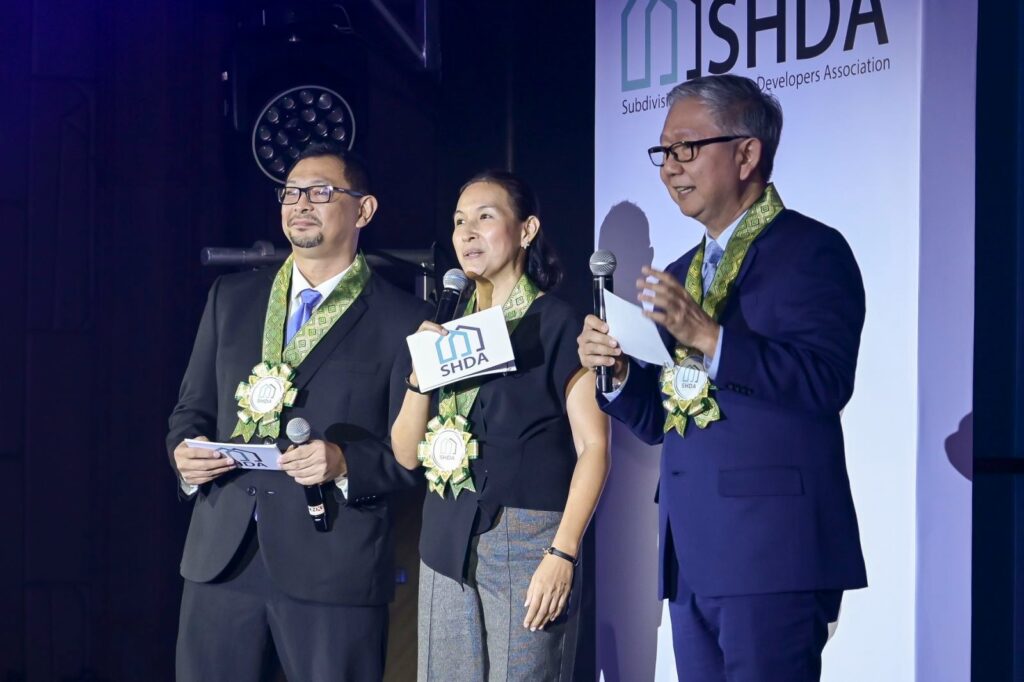
[L-R] SHDA Chairman Engr. Francis Richmond Villegas, Asst. Corp. Secretary and 2026 National Developers Convention Chairperson Clarissa de Joya, and National President Kerwin V. Padua formally declared the opening of the two-day convention.
Beyond policy and regulation, the second day of the convention turned attention to the people who will eventually live in these communities. Philippine Survey Research Center Research Director Andrea Dizon shared findings showing that 61% of Filipinos planning to buy a home within the next three years prefer to live just outside the city.
Location and accessibility continue to influence these decisions. Seventy-eight percent of respondents cited opportunity as an important consideration, while 57% preferred to live within 30 minutes of their family. The findings point to a growing preference for homes that offer more space while remaining connected to city corridors, accessible to opportunities, and close enough to family.
The discussions on innovation offered examples of how these changing expectations could shape communities. Jacinto C. Ng Jr., Founder and Group Executive Officer of Joy~Nostalg Group | Raemulan Lands Inc., discussed NING*NING, which created the world’s first grid-connected, utility-scale solar rooftop installation integrated into a socialized housing community.
Connectivity was another part of the conversation. Globe Telecom Vice President Abigail Cardino discussed the role of connectivity in modern homes and communities, while GIGIL Founding Partner Badong Abesamis and Plus 63 Co-Founder Dan Matutina looked at creative strategy, design thinking, and ways of connecting with a new generation of homebuyers.
The convention also drew lessons from communities that have already gone through decades of development. Fort Bonifacio Development Corporation Chief Operating Officer Enrique Manuel shared insights from three decades of developing Bonifacio Global City, including the importance of long-term planning, infrastructure, estate management, and the district’s next phase of smart-city, mobility, and sustainability initiatives.
PGAA Creative Design Principal Archt. Paulo Alcazaren, meanwhile, traced the evolution of Philippine subdivision planning and discussed the value of more walkable and sustainable communities, with stronger attention to public spaces.
For SHDA leadership, the real measure of the convention will be what happens after the event.
“A convention is only as good as what happens after it ends. These resolutions give our members, and the agencies we work with, something concrete to hold each other to,” SHDA Chairman Engr. Francis Richmond Villegas said.
Assistant Corporate Secretary and Convention Overall Chairperson Clarissa de Joya likewise pointed to the specificity of the commitments made during the gathering. She said the convention stood out not only because of the number of agencies involved, but also because discussions moved toward concrete areas such as permitting reforms, a formal review of property valuation law, and changing consumer behavior.
National President Kerwin Padua echoed the need to continue the work beyond the two-day event. “Two days of dialogue mean nothing if we don’t act on them. These resolutions are how we make sure this convention outlasts the days it happened in,” he said.
With the seven-point roadmap now adopted, SHDA said it will continue working with DHSUD and other government partners. The resolutions are intended to serve as a guide for both public and private stakeholders as they shape policies and programs affecting housing development and delivery.
For an industry dealing with changing buyer preferences, new technologies, infrastructure demands, and continuing affordability concerns, the next step will be turning those priorities into sustained action.
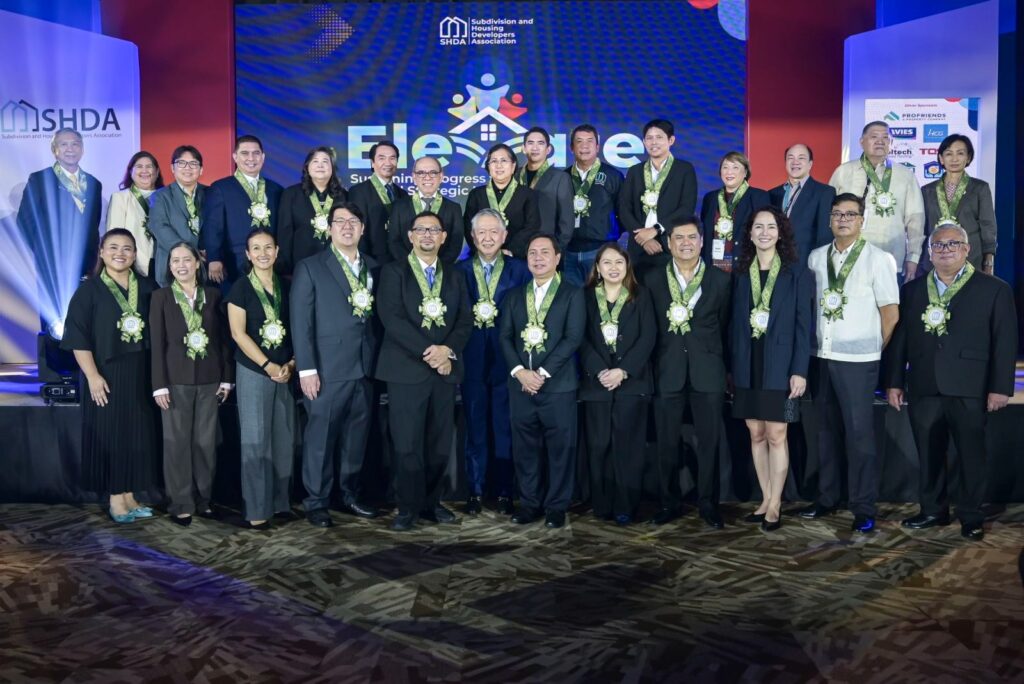
2026 SHDA National Officers, Chapter Presidents, Board of Governors and Advisors
ABOUT THE SUBDIVISION AND HOUSING DEVELOPERS ASSOCIATION, INC. (SHDA)
The Subdivision and Housing Developers Association (SHDA), Inc. is the foremost industry association for housing and development in the Philippines. With 350 members nationwide and eight regional chapters, SHDA maintains strong connections among the country’s top players and a dynamic national network of small and medium developers.
As the largest and leading industry association for housing and urban development in the Philippines, SHDA has actively partnered with the nation’s housing policymakers, key shelter agencies, and stakeholders for over 50 years, thereby playing a pivotal role in developing and strengthening the industry’s capabilities. SHDA member developers are responsible for building 80% of the homes produced annually in the country, giving the organization unparalleled reach among Philippine homebuyers.
For more information, visit shda.ph.